Commercial & Industrial Epoxy Floor Coatings in Stockton CA - a floor that fits the work
Peeling paint, stained concrete or a coating that can't take your chemicals? We match the system to your floor and plan around your downtime.
Which epoxy floor is right for a shop or warehouse in Stockton?
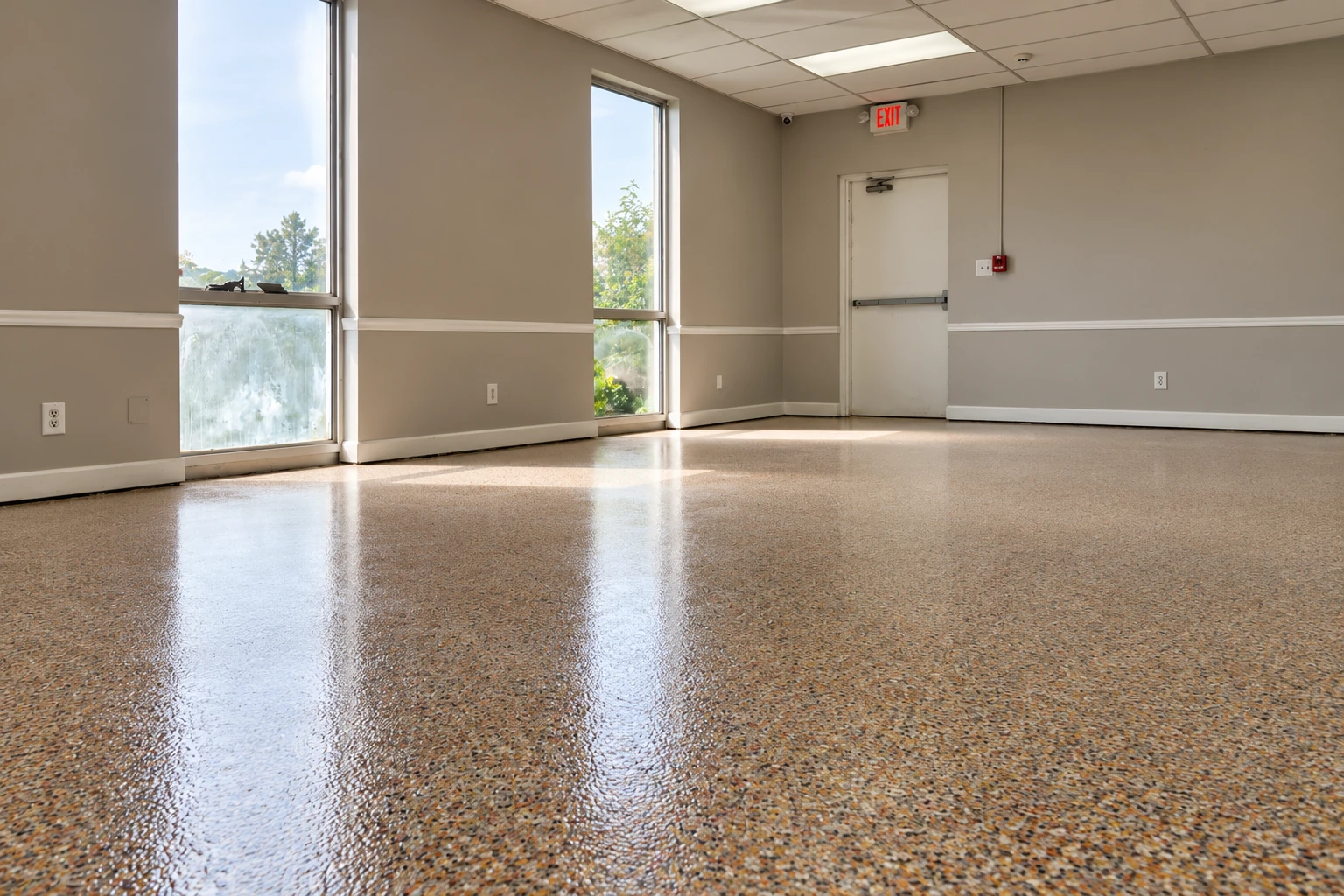
Commercial and industrial epoxy floor coatings in Stockton, CA put a hard resin layer over a ground and repaired concrete slab, which gives a warehouse, shop, kitchen or plant floor excellent durability and chemical resistance.
Most of these calls start with a floor that's losing the fight. A coating is peeling where forklifts turn, a kitchen floor won't come clean, or bare concrete is soaking up oil. The price moves with the size of the floor, how much grinding and repair the slab needs, whether old coatings have to come off, and which system your chemicals and temperatures call for. Extras like coved edges or separate wet areas add to it. The schedule turns on that same prep, on how long the product needs before traffic, and on how long you can close the area. My written estimate tells you the system I'd use and what your floor will cost.
What happens after you call about a commercial epoxy floor?
Call or send the form
Call (209) 420-1084 or send the request form with a few lines on the space and how it's used. We'll set a time for me to come out and see the floor.
I come out and check the slab
I check for moisture, cracks and old coatings, and I ask what hits the floor, how hot and cold the space gets and how long you can shut it down. You get a written estimate with the system I'd recommend, the reason for it and the price, so you know what you're paying for before you decide.
We set a date and install
Once you say go, we set a date around your operation, and our crew handles the prep and the install. I check the work along the way, because a problem in the prep is easiest to fix before the coating goes down.
We walk the finished floor
I walk the finished floor with you and go over when staff and vehicles can come back on it. Satisfaction guaranteed on every job.
How we put down a commercial epoxy floor, and the coatings that go with it
We start by asking what hits the floor every day, which chemicals reach it, how hot and cold the space gets and how long you can shut the area down, because those answers decide which system I quote. Then our crew grinds the slab to open up the surface, repairs cracks and damaged spots, and takes off any old coating that would let the new one peel. We test for moisture too, since coating makers cap how damp a slab can be and the limit changes from product to product, so the data sheet for the system we're using sets the target. Only then does the coating go down, timed around your schedule. If the slab isn't ready, I'll tell you straight and tell you what it needs first, because a floor is only as good as the concrete under it.
The same calls sometimes lead to other floors. Business owners often ask about garage floor coatings for their own homes, and a small shop with one or two bays can be a better fit for that system than a full industrial build. When the shutdown window is tight, we'll also price polyaspartic floor coatings, a faster-curing coating, so you can weigh a shorter closure against what each system handles.
Get a written recommendation and quote for your commercial floor
Send the form and we'll reply within one business day to set a time for me to come out. The estimate at your property is free, and there's no obligation once you have the written quote in hand.
Commercial epoxy floor questions in Stockton
Should my commercial floor be epoxy or urethane?
Choose based on the floor's main stress. Go with epoxy when chemicals are the problem and urethane when sudden heat and cold are. Epoxy gives excellent durability and chemical resistance. Urethane flexes more and handles thermal shock, the quick temperature swings you get from hot washdowns or a cooler door opening all day. I ask about both at the estimate and tell you which one I'd put down.
How do I choose an epoxy floor that stands up to chemicals?
Start with a list of every chemical that reaches the floor, because that list decides the system. One maker says standard epoxy suits moderate exposure like oils, greases and routine chemicals, while novolac epoxy adds resistance to concentrated acids and aggressive solvents. A floor that handles quick spills wiped up promptly may fail under constant immersion in trenches, containment areas or sumps, so those wet zones may need a different system than the rest of the room.
How much does commercial epoxy flooring cost in Stockton?
The price is set per floor after I see the slab, because it depends on the size, the condition of the concrete and the system the floor needs. Grinding, crack repair, removing an old coating and dealing with moisture all add prep. A chemical-resistant or urethane system, coved edges or separate wet zones cost more than a standard epoxy on open floor. The written estimate shows the system I'd recommend and the price for your floor.
How long does a new epoxy floor need before staff and forklifts can use it?
One maker's data sheet allows light foot traffic after 24 hours, light vehicles after 72 hours and heavy traffic after 7 days, at 70 degrees and 50% humidity. Cooler temperatures stretch those times, so plan your shutdown around the heavy-traffic date, not the first day people can walk on it. We set the install date with that in mind.
What does a restaurant or food plant floor need in San Joaquin County?
San Joaquin County requires floors to be smooth, durable, nonabsorbent and easy to clean, and coved where the floor curves up to meet the wall. That covers areas where food is prepared or stored, areas where utensils are washed, restrooms and employee change areas. Sales areas are excepted, and areas that store food only in unopened shipping containers don't need the cove. A seamless coating with a coved edge gives you that kind of floor. Your plans include a finish schedule listing the material, color, finish and brand, so our bid names the product. When the work is done, you contact the county's Environmental Health Department to arrange a final inspection. That inspection has to pass before you open or use the remodeled area, so build it into your reopening date.
Which license does a contractor need to apply epoxy in California?
California's D-12 Synthetic Products Contractor class lists resin and epoxy application among the work it covers. Ask anyone bidding your floor which license class they hold. We're licensed and insured.
Other coatings worth a look
Garage Floor Coatings
For a home garage or a small shop bay, a garage coating puts the same prep work under a floor that handles oil drips and tire marks.
Polyaspartic Floor Coatings
When you can't close an area for long, a polyaspartic coating is worth pricing, because it cures faster than most epoxies and gets traffic back sooner.
Send us your floor size and chemical list
Call (209) 420-1084 or use the form with the square footage, the chemicals that reach the floor and how long you can shut down, so I come out already thinking about the right system.